Join the coalition to protect the Ethereum community against front running, sandwich attacks, and real-time censorship.
You submit a trade. You click mint. You hit send. Moments later, you get a worse price, miss the NFT, or watch your transaction stall.
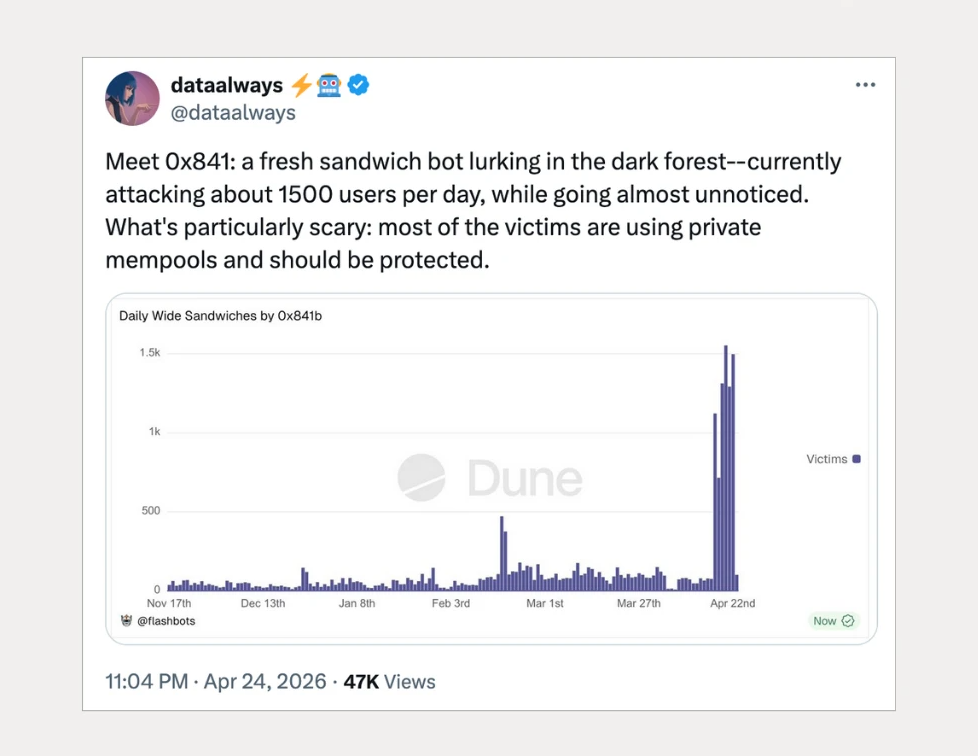
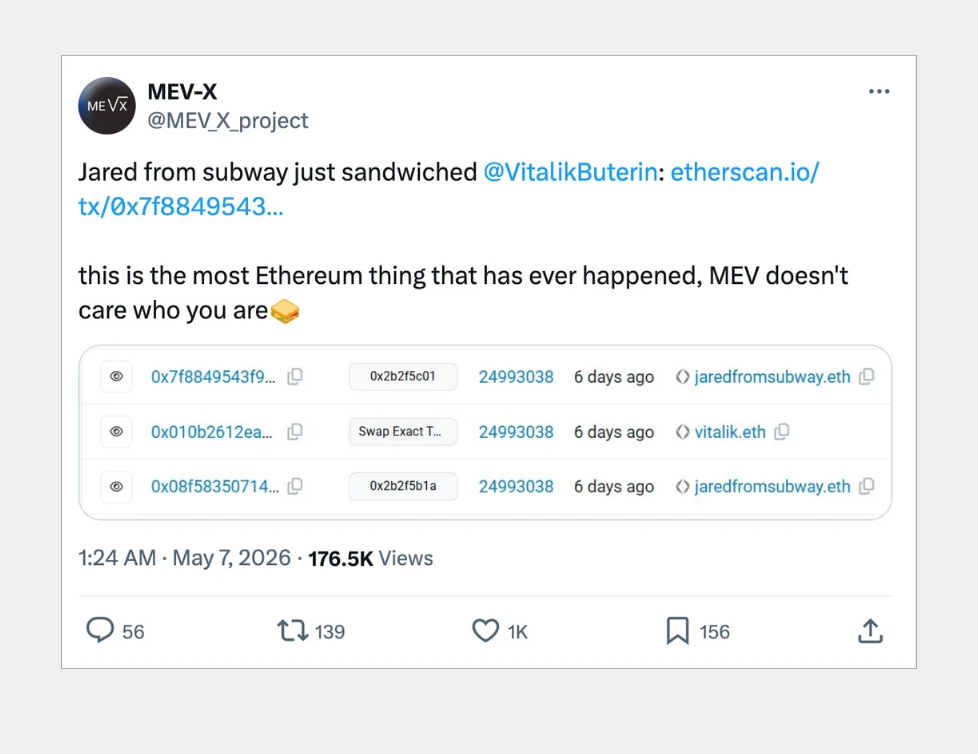
This is not a wallet problem, not a DEX problem, not a user mistake. It's how Ethereum handles transactions by default. Before a transaction is confirmed, it sits visible in the public mempool. Bots, builders, and others can see your intent and use that visibility to extract value from you with front running and sandwich attacks.
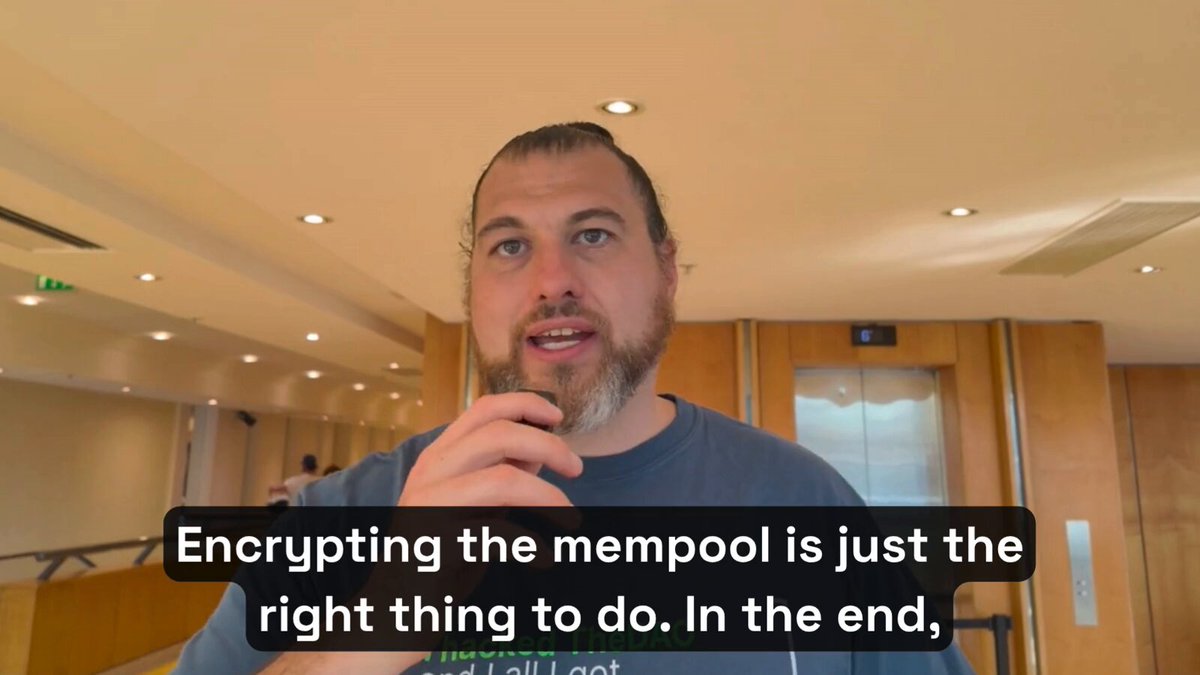
An encrypted mempool on Ethereum would change this. It would let you send encrypted transactions that stay hidden from everyone until your transaction is locked in by the chain. This removes the visibility that fuels front running, sandwich attacks, and real-time censorship, while preserving decentralization and credible neutrality.
We've come together to rally support to Encrypt the Mempool! in Ethereum's upcoming I* hardfork.


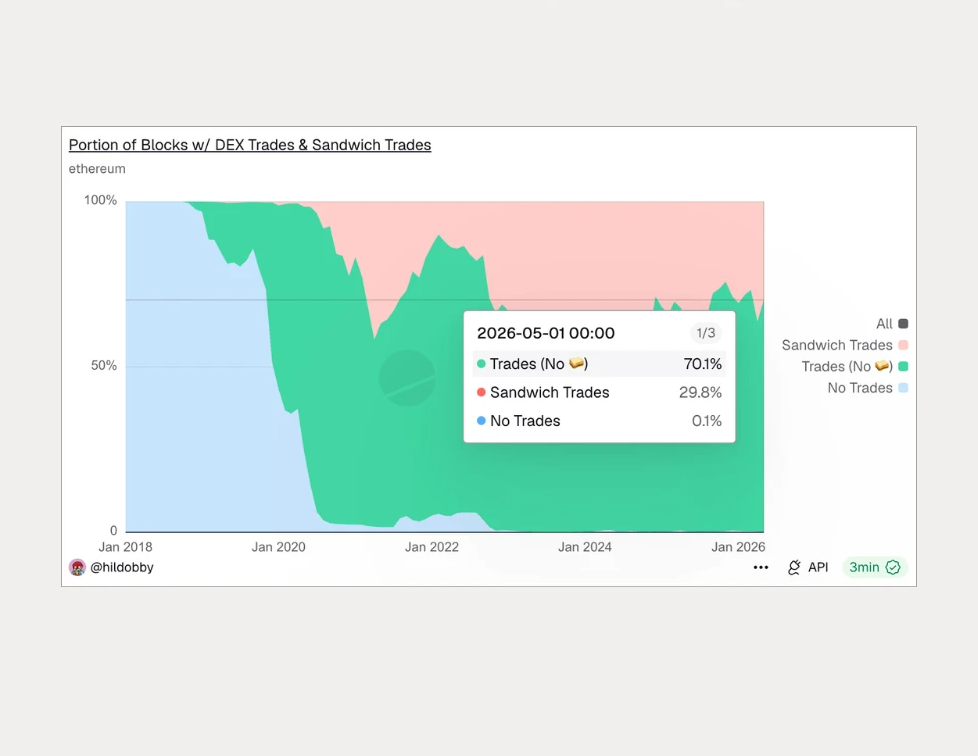
Since 2020, more than $1.8 billion has been drained from Ethereum users through MEV, much of it from malicious tactics like front running and sandwich attacks. Encrypted mempools hide transaction contents until ordering is fixed, removing the visibility that attackers rely on. This makes front running much more difficult.
Today, users must hunt for protected DEXs, special wallets, or custom RPCs for malicious MEV protection. As a result, protection is fragmented and can be missed, especially by newcomers.
In the long run, a native encrypted mempool moves Ethereum toward a future where users are protected against front running, sandwich attacks, and real-time censorship by default.
In the near term, this EIP enables wallets to give their users this protection, without relying on private infrastructure or trusted intermediaries that introduce additional risk.
Private mempools, commonly used via private RPCs, are a popular way Ethereum users protect themselves against toxic MEV. But they still rely on a small group of operators who can see your transaction and must be trusted not to attack it. That visibility creates a real point of failure.
By contrast, encrypted mempools keep transactions hidden from everyone. No operator, partner, future sequencer, or infrastructure provider can see transactions until it's confirmed.
Learn more about the difference between private mempools and encryption mempools.
Serious liquidity and institutional users need confidence that their transactions cannot be exploited.
Encrypted mempools reduce reliance on trusted intermediaries and address concerns that previously hampered Ethereum adoption.
This is the level of protection Ethereum needs.
Not all MEV is bad. Encrypted mempools protect against front running and sandwich attacks (which is generally considered to be the major source of bad MEV), while still allowing arbitrage, liquidations, and back-running which is considered good MEV.
Learn more about the difference between good and bad MEV.
Now that ePBS and FOCIL are on the Ethereum roadmap, encrypted mempools can join them to create a powerful protection system. Together they create a strong, three-part defense against censorship, making sure your transaction is included on time and cannot be filtered or delayed.

Learn more about the Holy Trinity for Censorship Resistance on Ethereum (FOCIL x ePBS x Encrypted Mempools).
Today most Ethereum blocks are built by a few high performance builders who gain early access to transaction contents. This concentration reduces Ethereum's censorship resistance guarantees. Encrypted mempools are a countermeasure that enables users to hide transaction content from builders and thereby make censorship much more difficult.


The Encrypt the Mempool! Coalition is a community effort to protect Ethereum users from front running, sandwich attacks, and real-time censorship. Together with Ethereum client teams, developers and researchers, infrastructure teams, wallets and community members, we are pushing for one clear goal: Encrypt Ethereum's public mempool in the upcoming I* hardfork.
Coalition members help raise awareness, build public support, and push forward the case for an encrypted mempool on Ethereum.
For months, contributors across the Ethereum ecosystem have been working toward an EIP for an encrypted mempool on Ethereum. An EIP, or Ethereum Improvement Proposal, is how Ethereum contributors propose changes to the protocol.

LUCID is one earlier EIP proposal that has helped shape the discussion, but it is not necessarily the final design. The current work is focused on refining the approach, making improvements to execution quality, and preparing an EIP for submission ahead of Ethereum's upcoming I* hardfork.
Technical working groups are actively discussing the design so Ethereum has a credible path toward protocol-level mempool encryption.
Nope! Private mempools, commonly used via private RPCs, are a popular way Ethereum users protect themselves against malicious MEV. But they still rely on a small group of operators who can see your transaction and must be trusted not to attack it. That visibility creates a real point of failure.
By contrast, encrypted mempools keep transactions hidden from everyone. No operator, partner, future sequencer, or infrastructure provider can see transactions until it's confirmed.
Encrypted mempools have been researched for years and tested across both experimental and live deployments.
A live encrypted mempool on Gnosis Chain has processed thousands of encrypted transactions with support from Nethermind and Erigon validators, proving the model works in production. Shutterized Beacon Chain research demonstrated how encrypted ordering can integrate safely with Ethereum consensus. Deployment on the Sepholia OP Stack testnet validated encrypted flows in an L2 environment. An upcoming proof of concept with Primev brings encrypted ordering into Ethereum's out of protocol transaction supply chain PBS.